
FHE home battery
Your sun, after sunset.
Store what your panels produce during the day and use it in the evening, when Mauritian homes use the most — lights, cooking, air conditioning.
See what we installWho qualifies, what the grant covers, when a battery is required — and how we prepare your CEB file with you, from the first visit to the new meter.
Chat on WhatsAppThe scheme in one minute
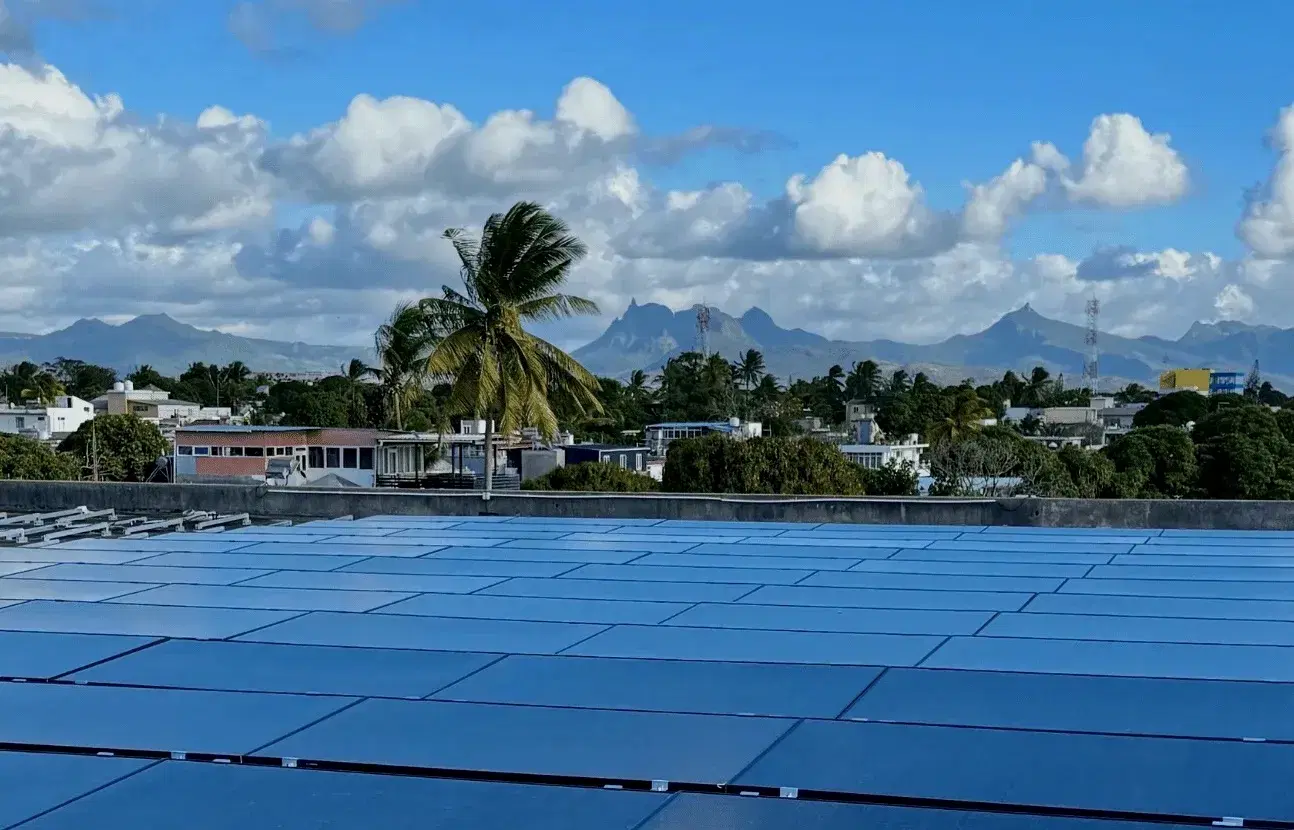
Launched by the CEB in April 2026, the Household Rooftop Solar PV Scheme lets CEB domestic customers connect a solar system on their roof to the grid and be credited for the energy it produces.
It replaces the 2015 SSDG net-metering scheme and the 2021 domestic scheme. If you heard about those, they are closed: this is now the one scheme for homes.
How your solar is credited
The scheme offers two ways for the CEB to count what your roof produces. Which suits you depends on when your home uses electricity — we look at your bills with you before you choose.
Rs 4.83per kWh produced
Everything your panels produce is credited at one fixed rate, raised from Rs 4.20 in July 2026. Simple to follow on your bill.
Read the CEB leafletRead the Budget SpeechRs 3.00per excess kWh exported
Your production first covers your own use — the water heater, the pool pump, daytime air-con — and only the excess is credited.
Charge on the energy you offset: Rs 0 up to 500 kWh a month, Rs 0.82 per kWh up to 1,000 kWh, Rs 1.63 beyond.
Read the CEB leafletSize and battery
The CEB leaflet revised in July 2026 ties the battery rule to the size of your system. The April version required one on every system — this is no longer the case.
Up to 3.5 kWac
Connect with or without a battery.
Above 3.5 kWac
Sized for at least 3 hours of your evening use — lights, cooking, air-con.
Above 10 kWac exported
The CEB studies the local network and issues a Letter of Intent before you go ahead.
Export is also limited to 5 kWac per phase — on a single-phase supply, that is your ceiling.
Read the CEB leafletFHE home battery
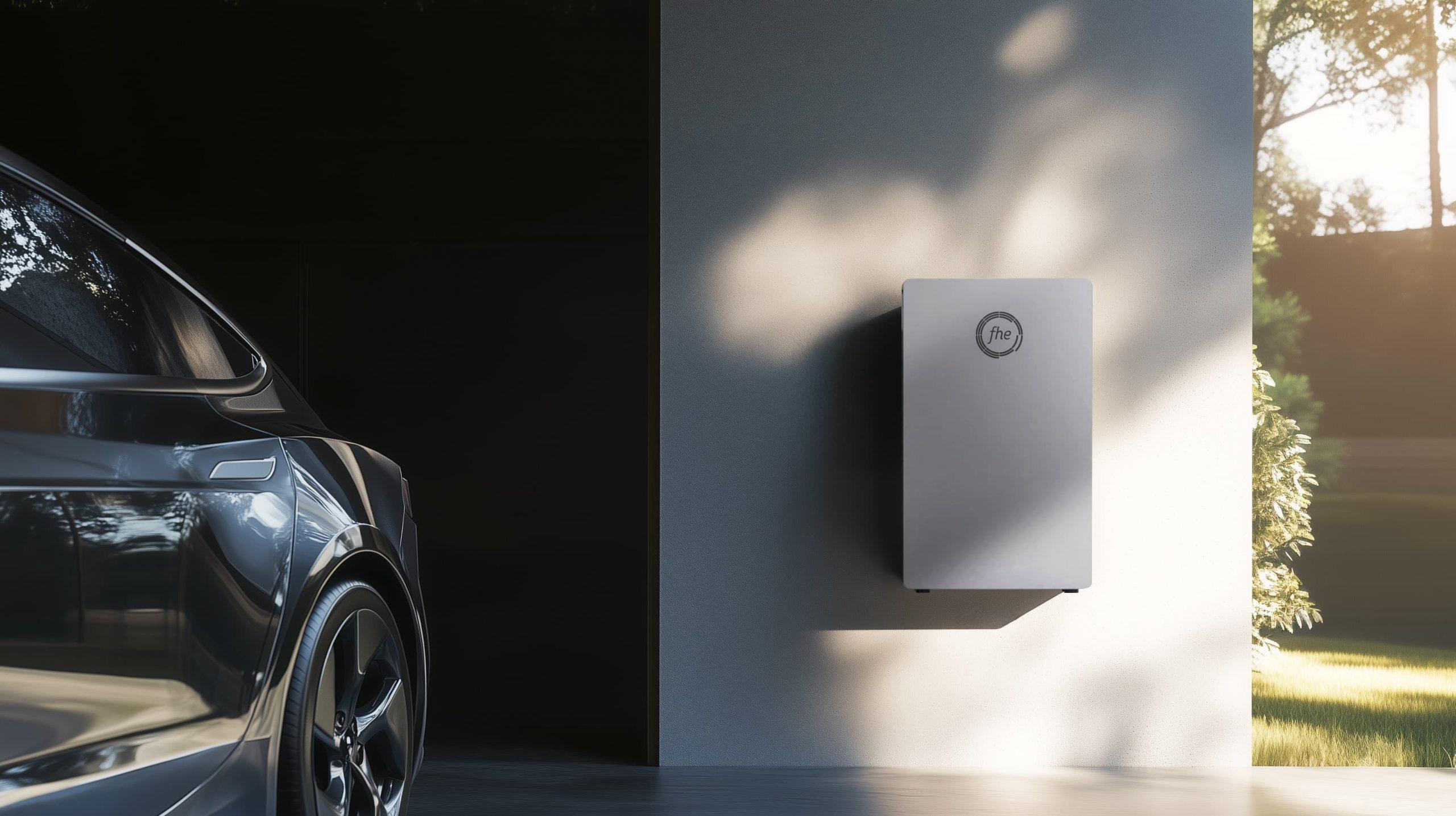
Store what your panels produce during the day and use it in the evening, when Mauritian homes use the most — lights, cooking, air conditioning.
See what we installThe steps
The CEB process in order. Where you see our name, we do it or prepare it with you.
We size the system on your CEB bills and your roof, and tell you on which side of the 3.5 kWac line it falls.
With GrubbsThe application is filed at a CEB Customer Service Centre, with a non-refundable processing fee of Rs 2,000. We prepare the file with you.
With GrubbsOur team installs the system to the CEB’s SSDG Grid Code (April 2026).
With GrubbsThe certificate confirming the installation is submitted to the CEB.
The CEB inspects the installation on site.
The CEB changes your meter. From then on, your production is credited — and you follow it in our app.
Paying for the rest
Three other official measures lower the cost of a solar system for a Mauritian household.
Estimate my system in 2 minutesUp to 3.5 kW, with or without battery: up to Rs 200,000 over up to 7 years, with at least Rs 10,000 from you after the grant. Up to 15 kW, batteries and EV charging included: up to Rs 1,000,000, 90 % of the project, over up to 7 years. Interest rates are set by the DBM.
See the DBM loan up to 3.5 kWSee the DBM loan up to 15 kWIndividuals can deduct the full amount invested in a solar energy unit — panels, inverter, battery, charge controller — in the income year (Income Tax Act, s.27C). Any unrelieved amount is carried forward, and a couple may split it. Solar water heaters do not qualify.
See it on the MRA sitePhotovoltaic systems, panels, batteries and inverters are zero-rated for VAT under the Fifth Schedule of the VAT Act.
Read the VAT ActQuestions
Answers taken from the CEB, DBM and MRA documents listed below.
Last checked 13 October 2026
It is the CEB scheme, open for registration since 15 April 2026, that lets CEB domestic customers connect a rooftop solar system to the grid and be credited for the energy it produces. It replaces the 2015 SSDG net-metering scheme and the 2021 domestic scheme.
Source: CEB — Household scheme 2026 · CEB information leaflet (July 2026)
Only for larger systems. Under the CEB leaflet revised in July 2026, a system above 3.5 kWac must include a battery sized for at least 3 hours of evening demand. Smaller systems can be connected with or without a battery.
Exported power of up to 10 kWac is accepted under the scheme; above that, the CEB first carries out a network survey and issues a Letter of Intent. Export is limited to 5 kWac per phase.
Yes. The CEB charges a non-refundable processing fee of Rs 2,000 when you register your application.
With gross metering, all the energy your system produces is credited at Rs 4.83 per kWh (rate revised in July 2026). With net metering, under the proposed Tariff 150A_NM (subject to URA approval), your production first offsets your own consumption and any excess is credited at Rs 3.00 per kWh.
Source: CEB information leaflet (July 2026) · Budget Speech 2026-27
Eligible households can receive a grant of 25 % of the system cost, capped at Rs 75,000 per application. It is funded by the Climate and Sustainability Fund and managed by the Development Bank of Mauritius (DBM), which receives applications through its online form.
Source: CEB information leaflet (July 2026) · Budget Speech 2026-27 · DBM grant application form
A standard grid-connected system switches off automatically when the grid goes down, so that no power flows into lines being repaired. To keep essential circuits running during a power cut, you need a hybrid system with a battery and a backup output. Ask us which setup suits your home.
Ready when you are
A free study of your bills and your roof, a system sized for the scheme, and a local team that stays after the meter is changed.
Chat on WhatsApp